See where your skills could take you.
Explore oil and gas, wind, vessel and hospitality routes before choosing your direction.
 OffshoreMastery
01 / YOUR STARTING POINT
Choose your route. Check the requirements. Prepare your applications. One practical guide, with the tools and 30-day action plan to help you begin.
English PDF · 48 pages · 30-day action plan
Instant digital delivery after payment.
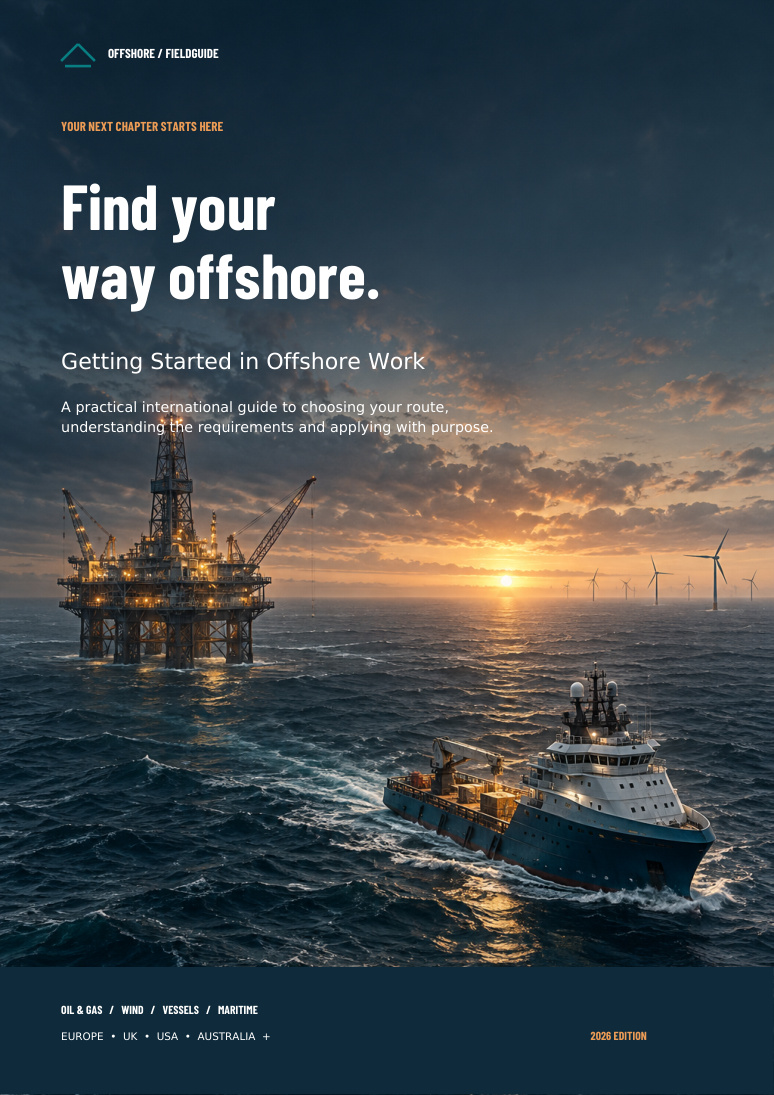
Your offshore starting point
Step-by-step career guidance + CV examples + printable worksheets + your 30-day action plan.
The ambition is there. Now give it a direction.
Which jobs fit me? Where can I work? What should I pay for first?
Bring the decisions together in one practical guide. Build a route around your experience, understand what employers ask for and start applying with a clearer plan.
Explore oil and gas, wind, vessel and hospitality routes before choosing your direction.
Use the eligibility and budget worksheets to investigate the costs that matter for your route.
Use CV examples, recruiter messages and interview guidance to prepare your applications.
Career routes, application examples and a plan you can follow.
Your offshore starter toolkit
48 pages of focused guidance, with 33 chapters, practical examples and a 30-day action plan. Read on your phone. Print the worksheets. Work through it at your pace.
Match your background to oil and gas, wind, hospitality, vessel crew or technical work.
Country guidance, work eligibility, training systems and medical acceptance.
Understand pay, find employers, sharpen your CV and check an offer.
A 30-day plan and printable worksheets to turn research into next steps.
What the numbers actually look like
Every figure in the guide is sourced — government wage data, official collective agreements, and Fair Work Commission determinations, not a marketing estimate.
That's base pay only. The guide explains why real total compensation typically runs 20-40% higher once benefits and overtime are counted.
And the same offshore tariff structure that pays platform managers also covers catering staff on the same installations.
From the very same official award that sets the entry-level minimum wage — sourced straight from the Fair Work Commission.
Standard on almost every installation and vessel, on top of salary — not instead of it.
Real job postings we reviewed show gym access, pool and wellness support included as standard, not the exception.
Ask what's included before you accept an offer — the guide shows you exactly what to ask for.
Catering and accommodation roles are the most accessible entry point for most people with no offshore background — and they're covered by the same pay agreements, free food and free accommodation as everyone else on board.
Not just engineers and drillers
Sourced from government wage data, official recruiter postings, and industry salary trackers — labelled by source, not blended into one misleading number.
A day rate of $300 on a 14/14 rotation run continuously (~183 paid days/year) works out to roughly $54,900/year in base pay — before superannuation, night-shift bonuses, hardship premiums, or overtime, which the guide's benefits chapter breaks down in full.
Included in your guide
A clear sequence for researching your route and preparing applications. Tap a stage to see the focus.
30 days of preparation and action. Hiring timelines depend on your route, eligibility and employers.
See the complete guide ↗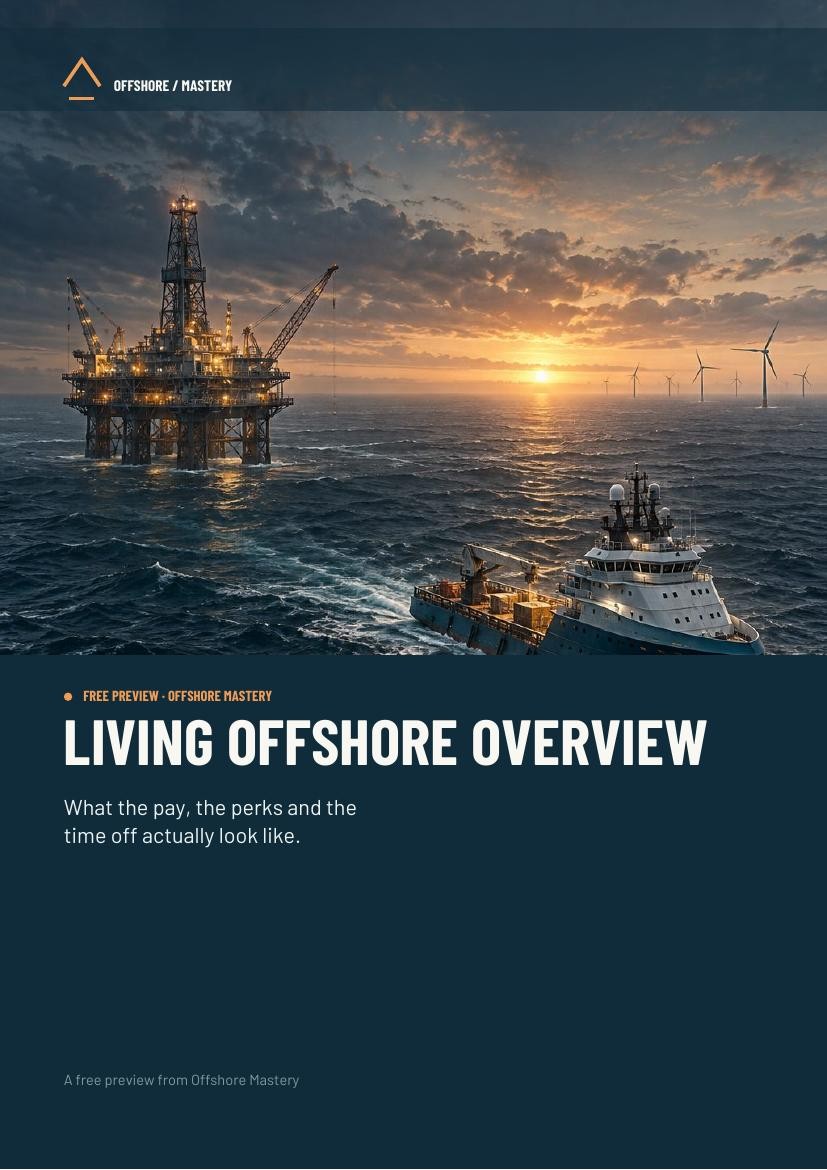
Not sure yet?
A free preview PDF showing what life offshore is actually like: real pay, free food and accommodation, the gym, the time off — before you commit to anything.
A small look at what you’ll use
Explore a short product tour. The complete examples, instructions and worksheets are inside the paid guide.
Keep the complete examples, worksheets and action plan in one English PDF.
Is this your next step?
You’re curious about offshore work, but the information feels scattered.
This is an independent career guide. It is not recruitment, a qualification or a promise of a job.
Same guide, same 30-day plan — just a different starting point depending on your situation.
Most people who buy this guide have never set foot on a rig, a platform, or a vessel. That's exactly who it's written for.
Kitchen, cleaning, or trade experience translates more directly than most people realise — you're often closer than you think.
Work rights and visas are checked before certificates, not after — the guide walks through this for each market it covers.
You don't have to know yet. The guide is built to help you compare the three before you spend money on any of them.
No engineering degree required
Most offshore entry roles don't need a degree — they need the right certificate and a background that already fits more than you'd think.
Covered under the same pay agreements as drilling crew in markets like Norway
Certificates: BOSIET, food hygiene
Entry-level, no offshore experience required
Certificates: BOSIET, MIST
$46,960–$66,000/yr — see the full matrix below
Certificates: BOSIET, MIST, basic rigging/scaffolding ticket
$62,500–$157,500/yr depending on experience
Certificates: BOSIET, MIST, trade qualification
One guide. A practical way to begin.
Getting Started in Offshore Work
The international English-language PDF guide.
One-time purchase
$29USD
Instant digital delivery after payment.
Get the guide ↗Independent career information. Employment and earnings are not guaranteed.
$29
$129 $157
Most people trying to break into offshore work do it blind — scattered blog posts, forum threads, and applications that go nowhere. We did the research once, checked the sources, and built the plan so you don't have to start from zero.
An international perspective
Explore the guide’s coverage by destination. Norway and Canada have their own entries. Other European countries and other destinations have separate research overviews.
Different workplaces. Different routes.
You don’t need the same background for every offshore career. Explore the possibilities before choosing a direction.
Your starting point
Tell us what you bring. Get a useful first direction and the questions to check next.
An exploration tool, not an eligibility assessment or a job offer.
Dream big. Prepare properly.
Clickable sources from standards bodies, government guidance, pay data and employer pages.
Understand which training fits your chosen route before paying for certificates.
CV examples, recruiter messages and worksheets help you put your experience into words.
Before you take the next step
The 30-day plan helps you research a realistic route, prepare your documents and take suitable application steps. It does not promise a job within 30 days. Some routes require further experience, qualifications or work permission.
You are paying for organisation and practical support: a sequence of decisions, examples, worksheets and an action plan in one place. The guide links to source material so you can check the details for your own route.
Some routes accept beginners; others require a trade, sea service or specific experience. The guide helps you identify genuine entry routes and what evidence to prepare.
Yes. It covers catering and accommodation roles, transferable experience and useful application questions, alongside other offshore pathways.
First choose your role and market. Check your work eligibility, the employer’s exact requirements and whether funding is available. Training requirements differ between oil and gas, wind and vessel work.
No. It helps you research suitable routes, understand costs and prepare applications. Employers make hiring decisions. Pay depends on the job, location, experience and contract.
An English-language PDF with 48 pages, practical examples, linked sources and printable worksheets. The product tour summarises selected tools without reproducing the complete guide. It is a one-time purchase, delivered instantly by download link after payment.
Start with a clearer route and a practical plan.
Questions before you buy?
We read every message ourselves. Expect a reply within a couple of days.